
The Tabbar Tradition: A Pahadi Tradition of Coming Home
- Details
-
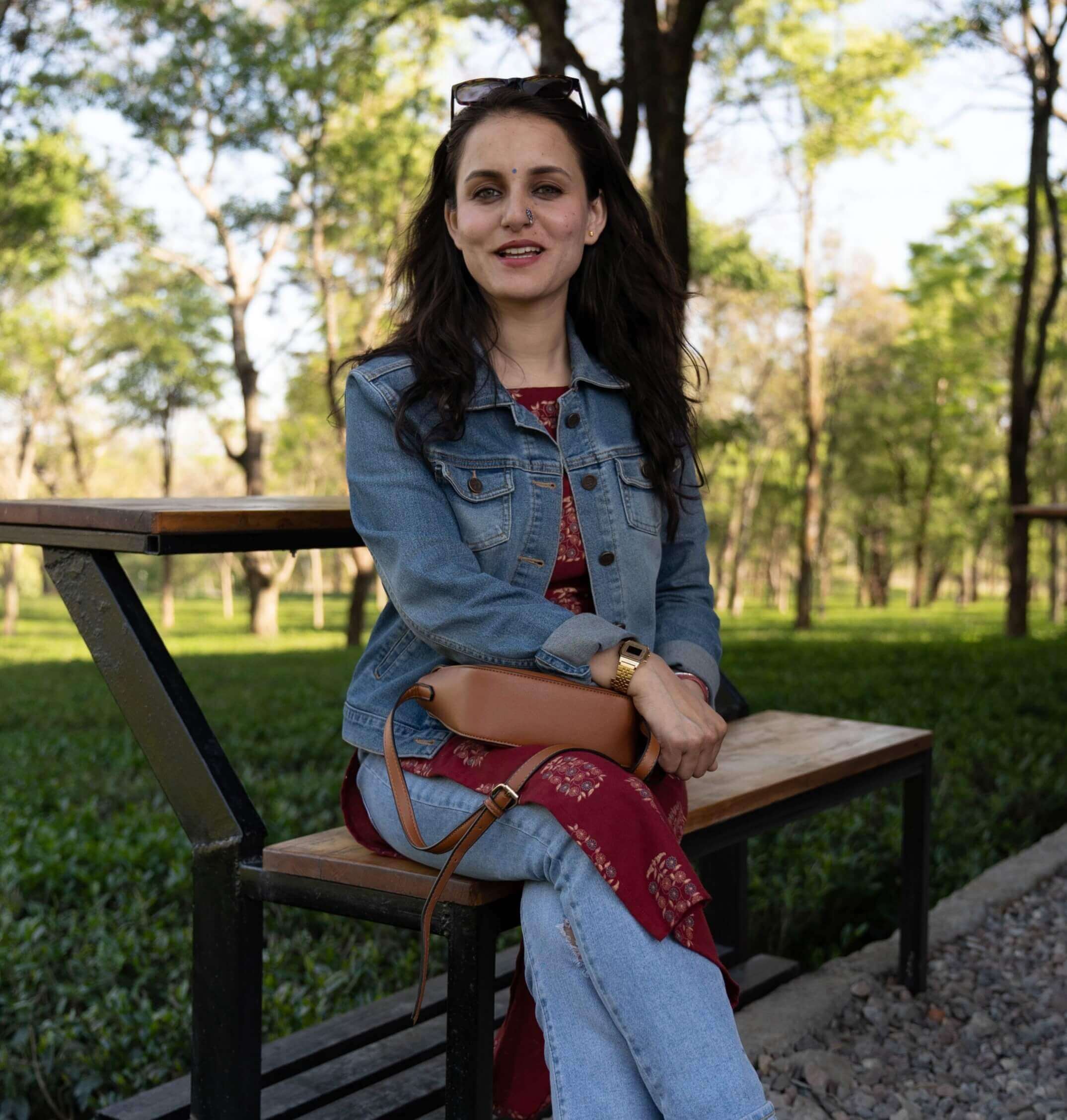 By Prachi Chauhan
 - Hits: 1576
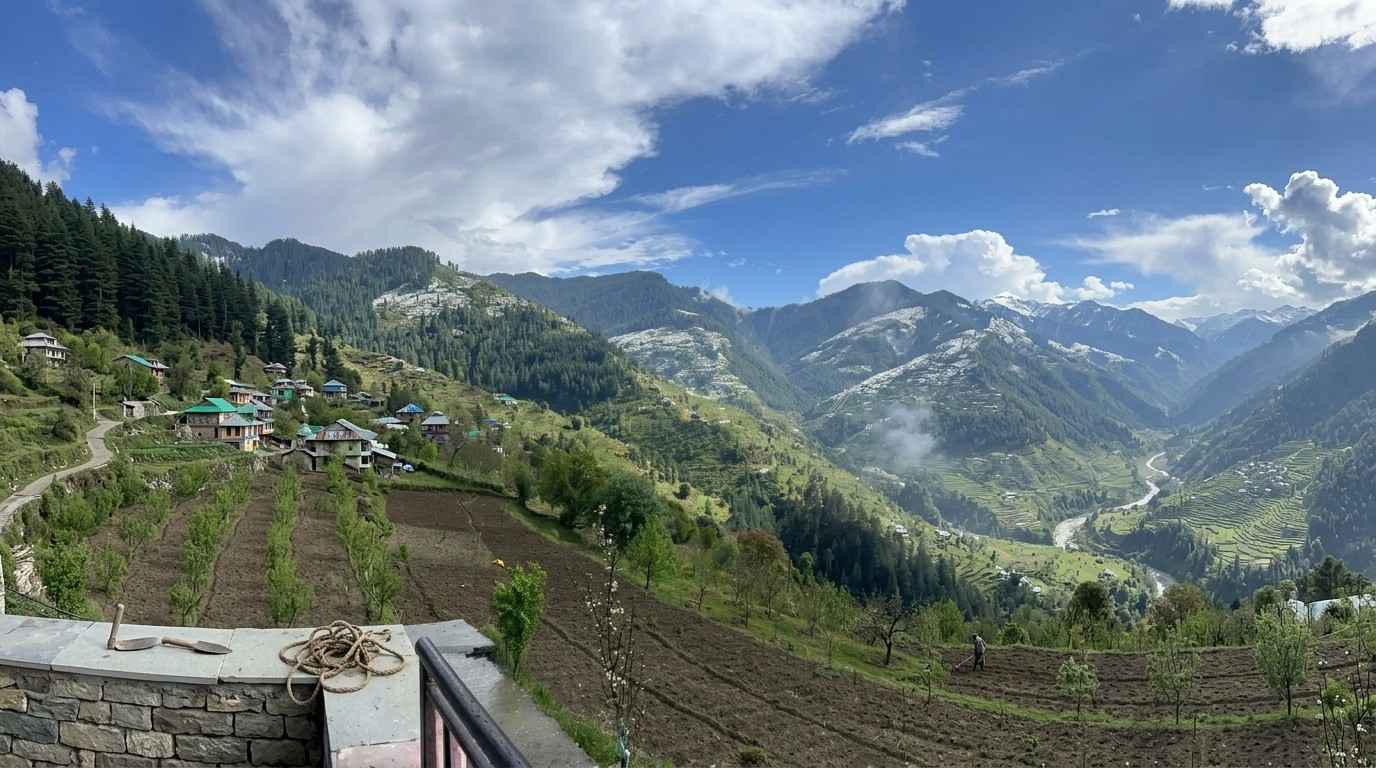
How a married daughter returns not just to a house, but to an entire village of relationships.
A Pahadi Tradition You Don't Notice Until You Grow Up
The Pahadi tradition of welcoming a married daughter home is something you don't fully notice until you grow up. No one explains it to you, and you never really question it. It simply becomes part of your routine. It is only later, when you step away and come back, that you begin to understand what it truly meant.
One such Pahadi tradition is what happens when a married girl returns to her parents' home. It is a return to an entire network of relationships, what we call tabbar.
Tabbar is more than family. It includes your extended family, people connected through generations, those who may live in different homes now but still remain deeply tied to you.
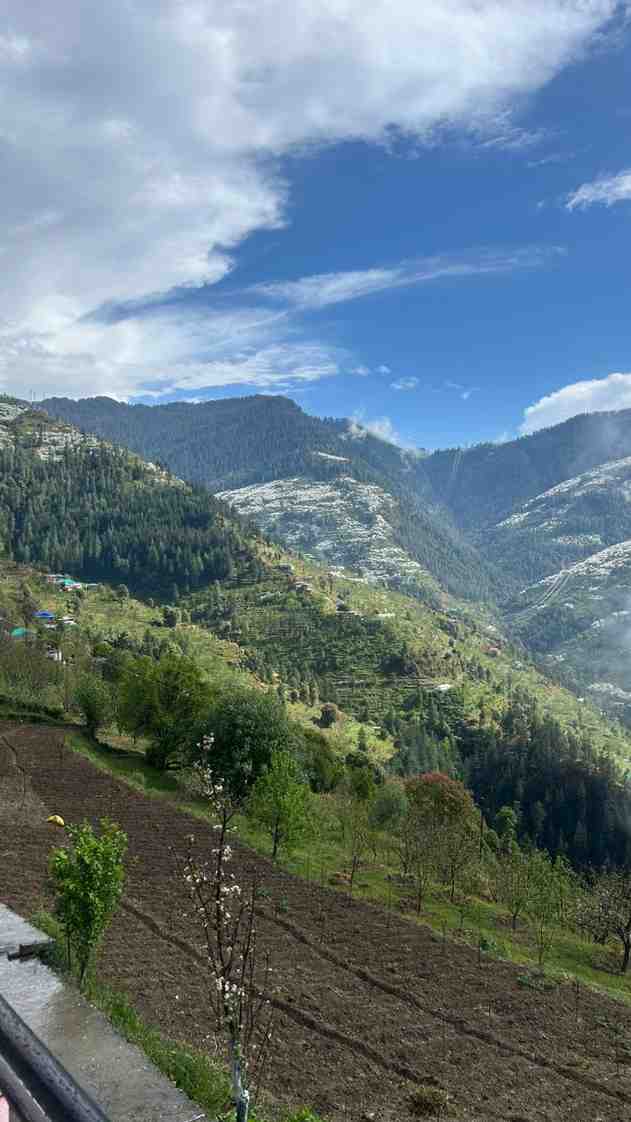
A Pahadi Tradition Built on Joint Families
In my family, my Dadaji had four brothers. Earlier, all of them lived together as one big household. Over time, as children grew up and got married, separate houses were built. But the separation was only physical. The relationships remained the same.
So whenever I go back to my village, I don't stay in one place. I move from one house to another, visiting my chachas, chachis, and their families. These visits are never formal. You sit down, and tea is already being made. Conversations begin without effort and continue without noticing time.
Very often, one visit turns into a meal. Someone will ask you to stay for breakfast, someone else will insist on lunch, and by evening you realise your entire day has been spent across different homes. It is not planned, but it never feels chaotic. It feels natural.
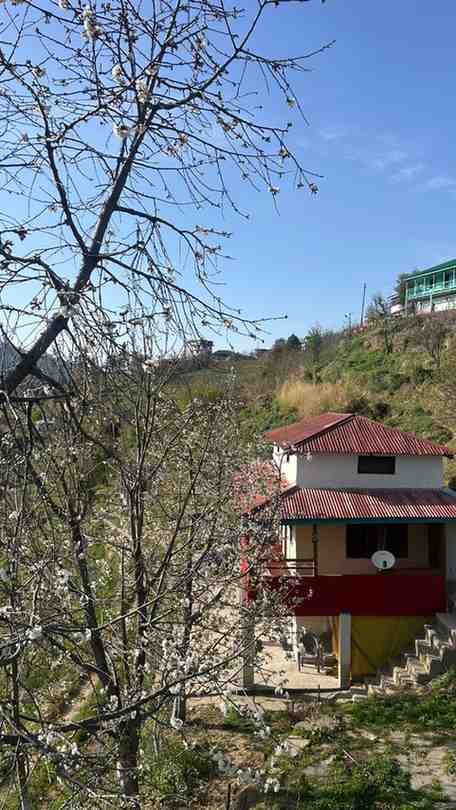
Today, this tradition has become slightly smaller. Married girls usually visit their extended family. But in my bua's time, it was much wider; they would go to almost every known household in the village. The scale may have changed, but the intent remains the same. You return not just to your home, but to your people.
When the Village Welcomes You Home
After my marriage, when I came back to my village for the first time, I experienced this Pahadi tradition differently. Instead of me going to everyone, people came to me. Relatives from across the village visited our home. Each person came with warmth and blessings. With every pair chhoona (the gesture of touching elders' feet for blessings), they gave money not as a formality, but as a way of marking this new phase of life.
It was as if the entire village welcomed me again, this time with a new identity. After that, I followed the tradition and went to every house myself. It was the circle complete.
The Chullah That Holds a Lifetime of Memories
Among all the rituals after my marriage, one moment stayed with me more than I expected.
In our home, we have a traditional iron chullah, the kind you still find in mountain kitchens. It is not just used for cooking. It is where life has happened. I have spent my childhood sitting around it during harsh winters, warming my hands, eating meals, and listening to endless conversations. That kitchen has seen generations of our buas, their elders, relatives who came and stayed, stories that stretched late into the night.
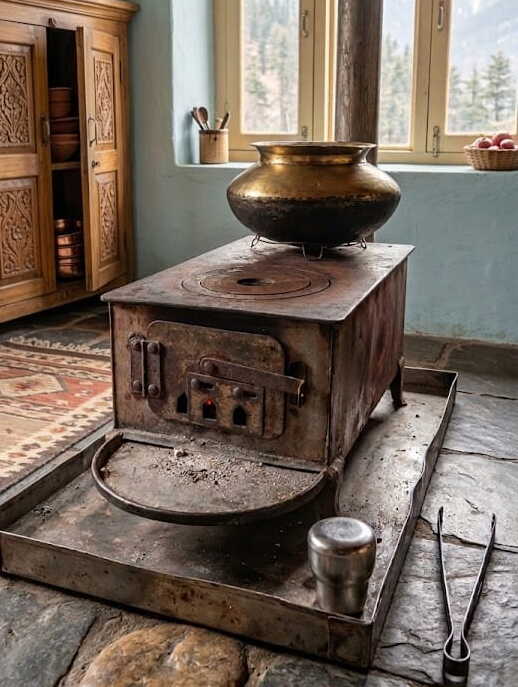
After my marriage, my husband was asked to perform its pooja. He did an aarti and bowed down to it. Watching that moment, I felt something shift inside me. It was not just a ritual. It felt like he was acknowledging everything that space had held: my childhood, my family, and the life built around it.
The Writer in the Family
One of the most meaningful parts of this visit was meeting an uncle who has always been special to me. He is my father's cousin, the son of my dadaji's sister, which makes him my uncle, and someone I have looked up to since childhood.
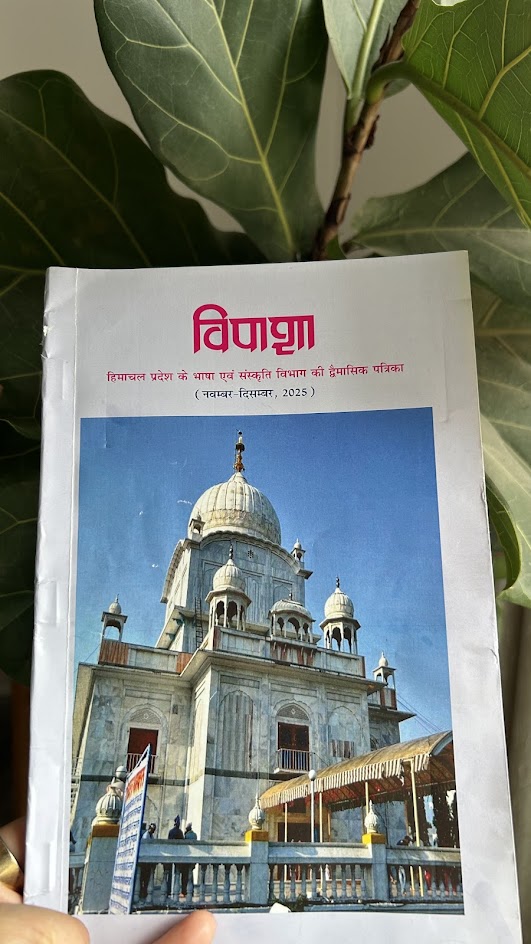
By profession, he serves as a Social Education and Block Planning Officer. But alongside his government service, he has built a quiet and steady life in Hindi literature. Over the years, his poems, short stories, plays, essays, and children's writing have appeared in some of the most respected Hindi literary magazines in the country: Kurukshetra, Sahitya Amrit, Bal Bharti, Bachchon ka Desh, Chakmak, Devputra, Himprasth, Bal Prahari, Nari Asmita, Him Bharti, Giriraj, and Divya Himachal, among others. His stories and plays have also been broadcast on Akashvani Shimla (All India Radio), and he is a published author in his own right.
This time, he gave me a magazine in which his latest story had been published. Holding it, I felt proud. It reminded me of my childhood. He had a small library room in his home, and for me, that space felt magical. I used to go there often and pick up weekly magazines for children. His stories would appear in those, and there was a quiet excitement in knowing that someone from our own family was part of that world.
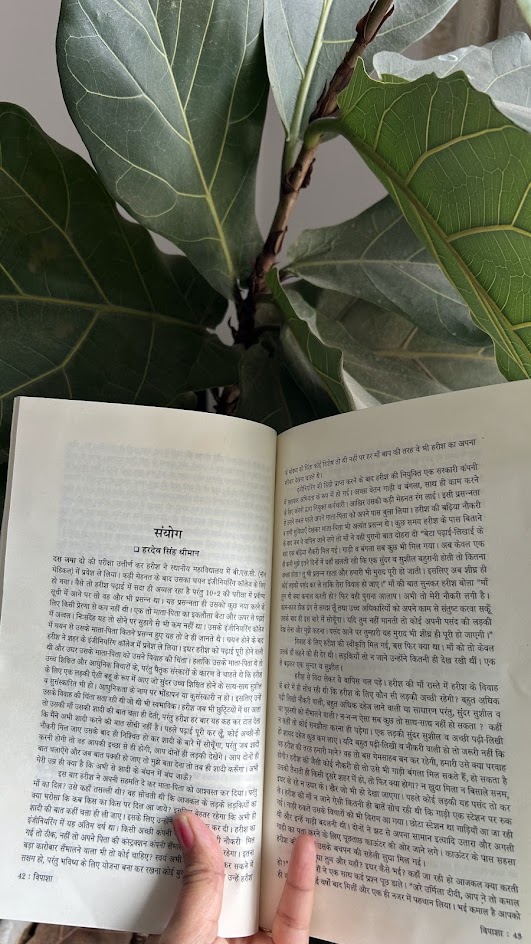
I still remember the time I got my hands on the Hindi version of Harry Potter and the Sorcerer's Stone from his library. I must have been in 6th or 7th standard, and for me, that meant my entire winter holidays was sorted. This was a time when villages did not have cable connections. Some homes had VCRs, others relied on antennas to watch Doordarshan. Most of our time during long snowy winters, was spent indoors. And during those days, stories mattered. Whether it was dadi ki kahani or books from that small library, they became our way of seeing the world beyond the mountains. Seeing him now, still writing and contributing, felt like a continuation of that same journey.
The Quiet Generosity of a Pahadi Village
Almost every home I visited had something ready for me. Someone gave me homemade ghee, rich and fragrant. Another offered dry fruits. There was buransh juice served with care, and proper Pahadi meals cooked in strong ghee. It was never asked for, and yet it was always there.
What made it meaningful was not just what was given, but the thought behind it. Life in villages today is no longer as slow as it once was. People have work, responsibilities, and full routines. And yet, they still take the time to welcome you properly. They sit with you, talk to you, and give you the best they have. It does not feel like an obligation. It feels effortless.
A Visit to the Kuldevi
No visit to the village ever feels complete without going to our kuldevi. It is not something we plan or discuss; it simply happens. This time too, I walked the same path I have taken many times before, and yet it never feels repetitive.
Standing there, folding my hands, and taking a few moments felt grounding in a way that everyday life rarely allows. It is not about asking for anything, but simply being present. Even when everything else keeps changing, this remains the same.
What This Pahadi Tradition Really Means
From the outside, these rituals may seem simple visiting relatives, sitting for tea, sharing meals, going to the temple. There is nothing elaborate about them. But their meaning lies in what they hold together.
This Pahadi tradition is not about rules. It is about staying connected in a way that feels natural. It ensures that relationships are not reduced to occasional calls or formal visits, but remain lived and present.
And maybe that is why these moments stay with you. Not because they are extraordinary, but because they are steady. They remind you that belonging is not something you have to build. Sometimes, it is something that has always been there, waiting for you to return.
Written by



More Read



Turning A Vision Into Reality